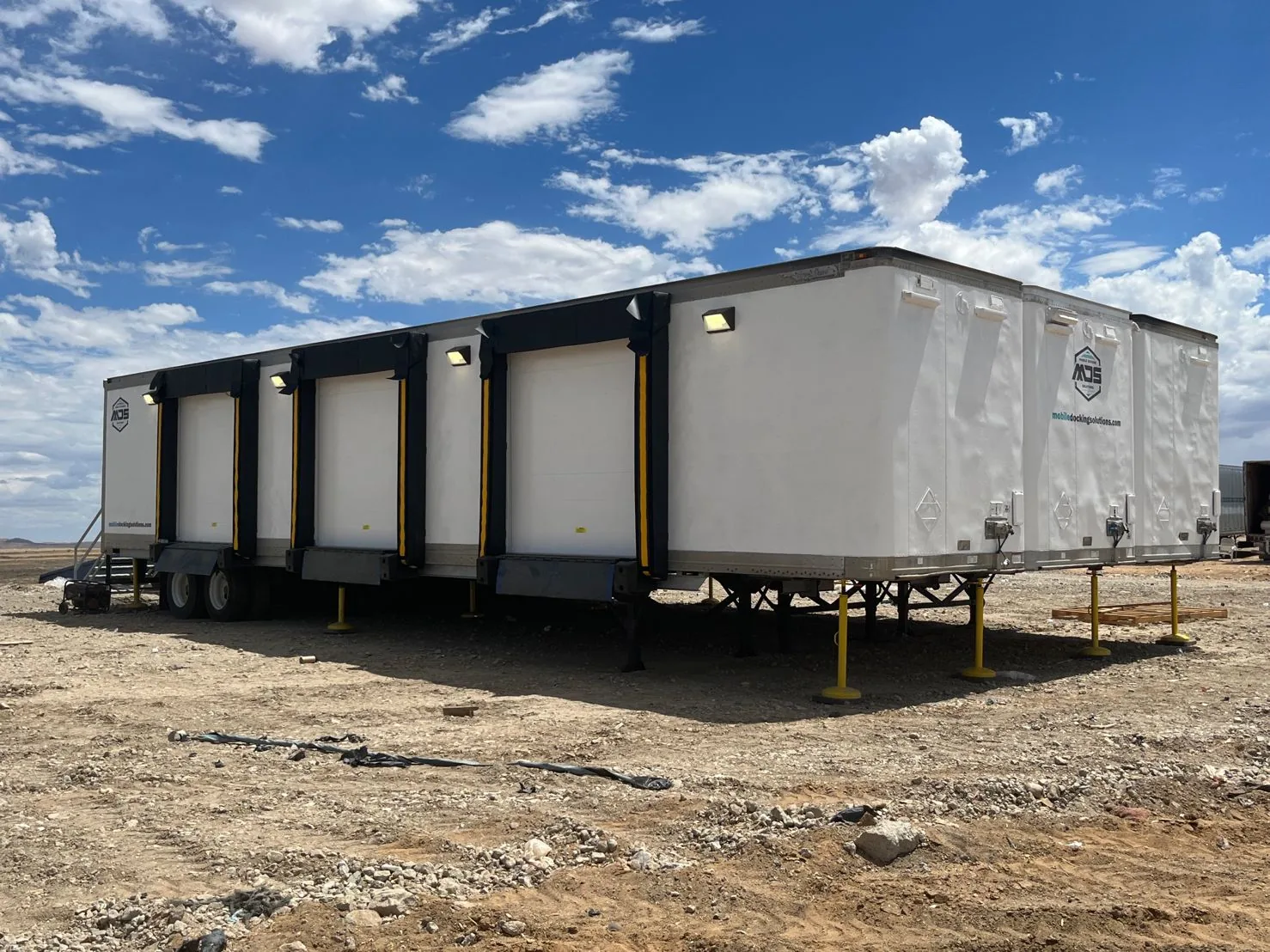
Warehouse overflow
Add receiving, staging or transfer positions when a facility cannot be expanded on the required schedule. A mobile platform can be positioned near the existing flow and reassigned later.

Flexible capacity for constrained, changing and specialized operations.
One platform, many operating patterns
Door count, trailer type, dock hardware, access and utilities can be combined differently for each application. The examples below describe operating patterns, not a fixed standard package.
Add receiving, staging or transfer positions when a facility cannot be expanded on the required schedule. A mobile platform can be positioned near the existing flow and reassigned later.
Move freight between a facility and multiple vehicles with fewer intermediate trips. Separate door positions can support sorting and direct transfer by route or destination.
Deploy additional dock capacity for volume peaks, agricultural seasons, projects, events or temporary programs without treating the layout as permanent.
Begin with reefer equipment and add suitable doors, seals, plates, levelers and climate systems when temperature-controlled staging is required.
Fit a receiving platform into usable yard space where permanent dock construction or building circulation is impractical.
Create a configured receiving and work platform at field sites, temporary facilities or locations without a conventional loading dock.
Separate freight inside the trailer, confirm products and quantities, and align staged cargo with the intended delivery position.
Maintain receiving or transfer capacity during renovation, relocation, construction sequencing or changes in warehouse use.
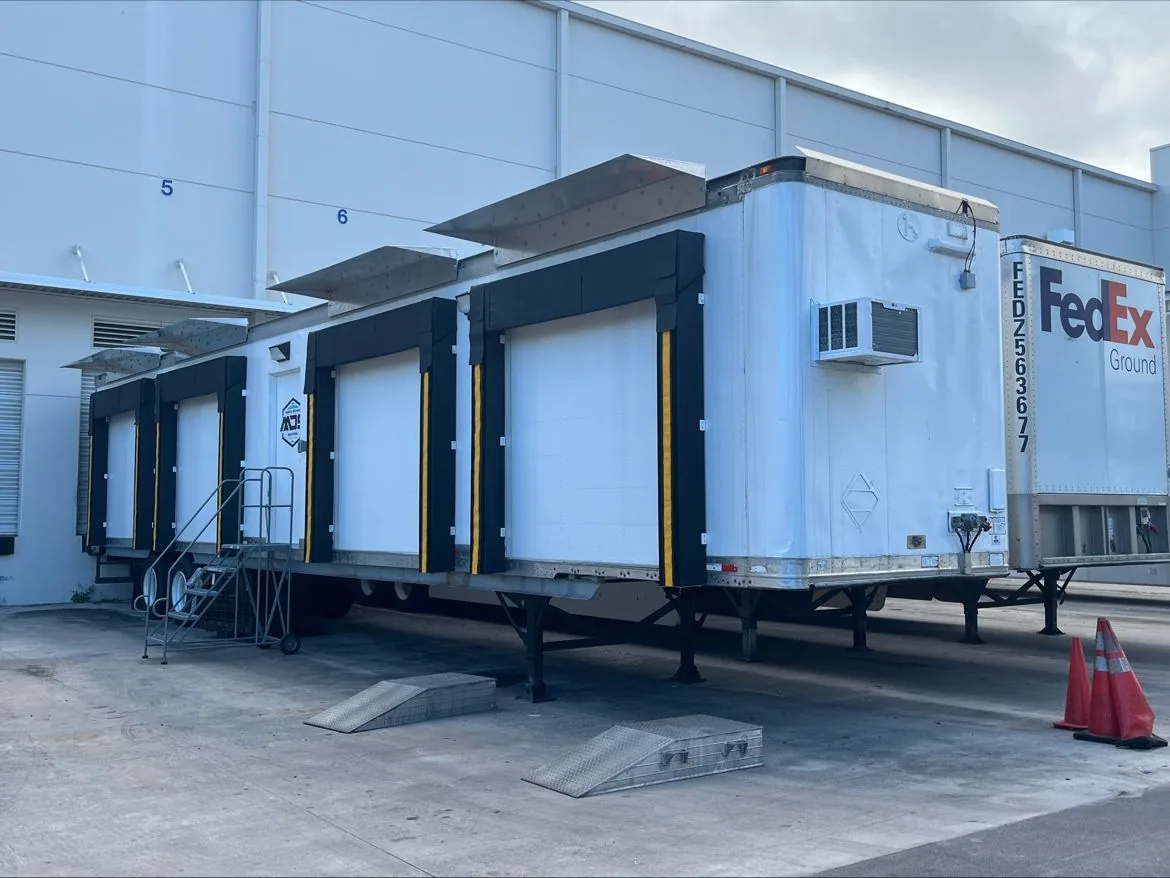
Documented configuration example
A documented MDS build paired two trailers for mobile cold-storage staging. The published project description identified four overhead doors on one side, three on the opposite side, a rear overhead door, and an interior overhead door creating a vestibule.
The arrangement illustrates how a mobile platform can be configured close to the product flow while combining temperature-control, transfer and personnel-access needs.
A platform that can move
Unlike a permanent dock addition, a trailer-based platform can be relocated, reassigned or reconfigured as sites, volumes and workflows change. Removable stairs, ramps, plates and related exterior accessories can support setup and takedown between deployments.